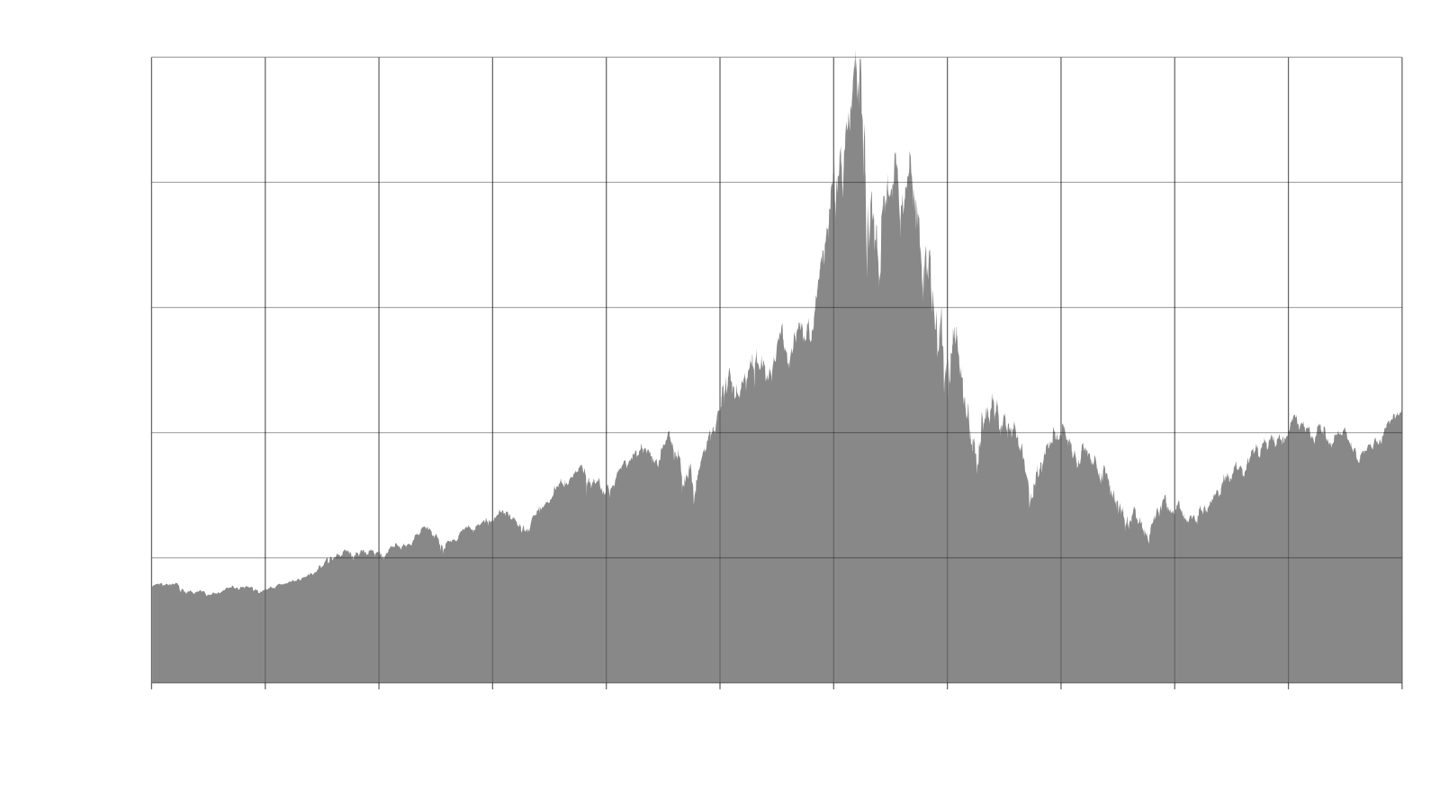
Is the AI industry in a bubble? No one can say for certain — bubbles are usually only provable in hindsight, once prices have already collapsed. But the debate itself is concrete. Economists, investors, and even central banks are pointing to specific numbers, not just a hunch, when they argue that what people now call the AI bubble describes a real gap between AI valuations and what the technology currently earns.
What actually makes something a “bubble”
An economic bubble is a period when asset prices rise well above what the underlying business can be shown to be worth, usually fueled by cheap credit and the belief that someone else will pay even more later. A bubble isn’t a verdict on whether a technology is fake or useless — the dot-com bubble of the late 1990s inflated around the internet, which was real and did transform the economy, and it still wiped out roughly $5 trillion in stock market value once it burst between 2000 and 2002. Whether a technology is genuine and whether its current price is sustainable are two separate questions, and the AI debate turns on keeping them apart.
The case that AI spending has outrun AI revenue
The most concrete argument for a bubble is a spending gap. The largest technology companies are on pace to spend several hundred billion dollars a year on AI capex — the data centers, chips, and power needed to run AI models — while what customers actually pay for AI products lags well behind. Sequoia Capital partner David Cahn popularized this framing in a widely read essay asking who will ultimately cover the industry’s bill, estimating a gap of hundreds of billions of dollars between infrastructure spending and realistic subscription and API revenue.
A related concern is circular financing: chipmakers and cloud providers investing directly in the very startups that then spend that money buying the investor’s own chips or cloud capacity. Critics argue these arrangements can make demand look larger and more independent than it really is, since the same dollar effectively changes hands twice — see our explainer on circular AI financing for how those deals work.
The case against
Not every serious analyst agrees a bubble is underway. Goldman Sachs researchers, weighing the parallels to the dot-com era, have argued that today’s leading AI companies — unlike many failed dot-coms — post large, real, and growing earnings, and that current valuations, while elevated, aren’t yet as detached from business fundamentals as internet stocks were in 1999 and 2000. On this view, heavy AI capex reflects a genuine capacity shortage rather than pure speculation, and the spending is concentrated among a handful of highly profitable companies rather than spread across thousands of unproven startups, as it was the last time around.
What would “popping” actually look like
Because much of today’s AI buildout is funded with borrowed money rather than cash on hand, the institutions most focused on the bubble question — including the Bank for International Settlements, and reportedly the U.S. Treasury in an internal analysis — have worried less about stock prices and more about debt. Their concern is that a sharp AI slowdown wouldn’t just erase paper gains in tech stocks; it could also strain the banks, private credit funds, and utilities that financed data centers on the assumption that AI demand would keep climbing. A pop, in that reading, looks less like a single crash and more like a chain reaction: falling AI revenue forecasts, stalled data-center projects, and losses rippling into the credit markets that funded them.
In the news
Today’s mega-deals are exactly what the bubble debate is about: Nvidia and SK Group’s $500 billion AI infrastructure partnership commits enormous capital before it’s clear how much of that capacity the market will actually pay to use.