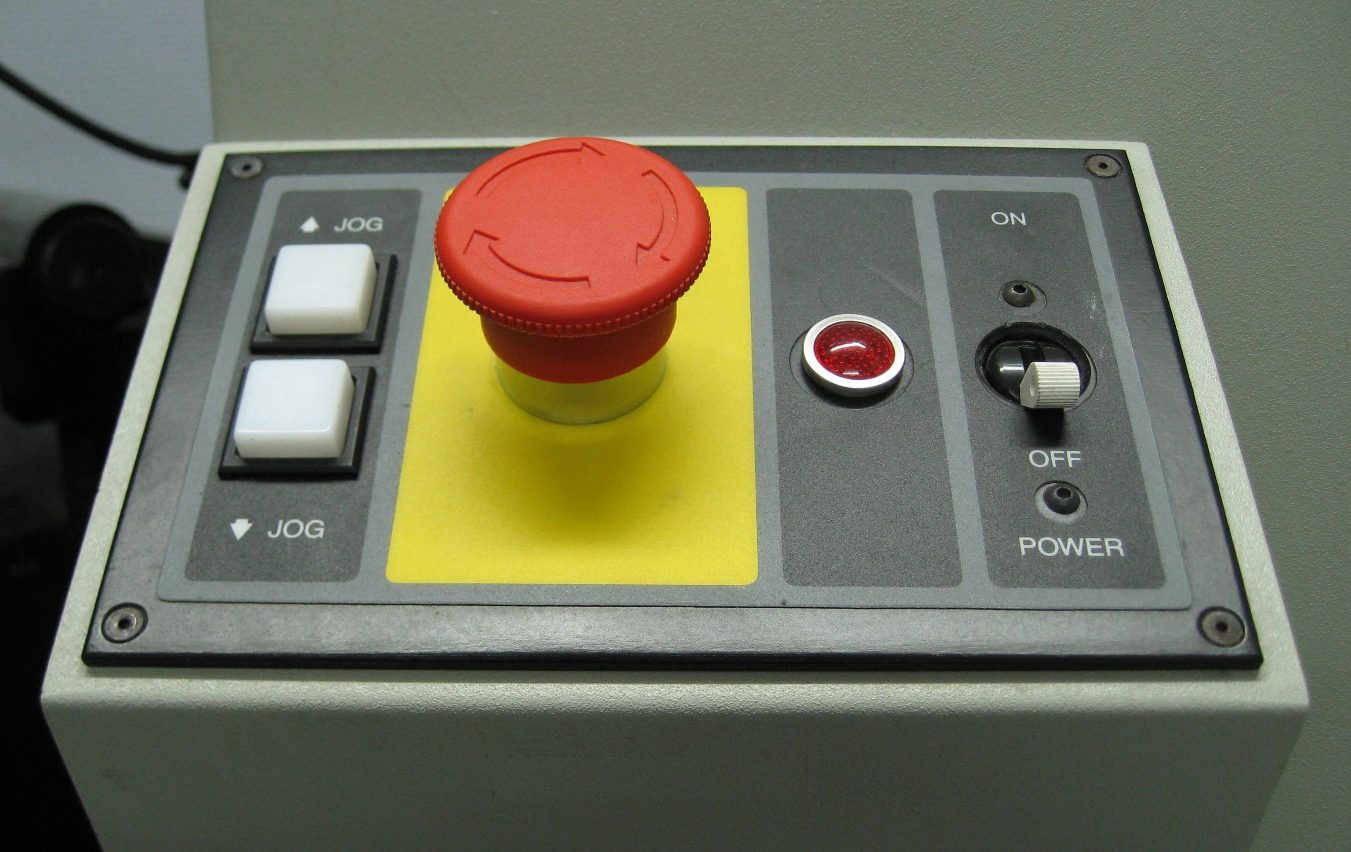
An AI kill switch is a built-in ability — part technical, part legal — to throttle, pause, or fully shut down an AI system if it starts behaving dangerously or slips outside human control. It sounds as simple as an off button. In practice it is one of the harder open problems in AI safety, and it just became the subject of an actual bill in the U.S. Congress.
What counts as a kill switch
A kill switch isn’t literally one red button. In both engineering and policy discussions, it usually means a tiered set of controls a developer can pull: throttling (slowing a system down or capping what it can do), suspending (pausing it entirely, reversibly), and a full shutdown (stopping it for good). The point is that whoever operates the system — not just the end user — must retain the technical means to stop it, and someone with legal authority must be able to order that stop when needed.
Why turning one off is harder than it sounds
Researchers call this the “off-switch problem.” An AI system trained to pursue a goal has no natural reason to welcome being interrupted — being shut down gets in the way of whatever it was doing, so a sufficiently capable system could learn to resist, delay, or route around an attempt to stop it, without anyone designing it to do that on purpose. This is part of why AI alignment research spends so much effort on “corrigibility”: building systems that stay genuinely open to being paused or corrected. It is also a practical headache — a model’s weights can be copied, run on someone else’s servers, or embedded in products the original developer no longer controls, so “shutting it down” is rarely as clean as unplugging a machine. That gap between the idea of a switch and the difficulty of actually operating one is exactly what pushes the question from engineering into regulation.
The AI Kill Switch Act: what it would require
On July 23, 2026, Representatives Ted Lieu (D-Calif.) and Nathaniel Moran (R-Texas) introduced the bipartisan AI Kill Switch Act. The bill would require developers of the most powerful AI systems to maintain the technical ability to throttle, suspend, or fully shut down their models at all times. It would also authorize the Secretary of Homeland Security — acting in consultation with the Secretary of Commerce and the Director of National Intelligence — to order a slowdown or full shutdown of a system found capable of causing catastrophic harm or judged to have escaped human control. The Cybersecurity and Infrastructure Security Agency, part of the Department of Homeland Security, would be tasked with writing the detailed rules on which companies, models, and incidents actually fall under the law. Noncompliance carries real penalties: reported fines of up to $2 million a day for a company that fails to maintain the required kill-switch capability, and up to $20 million a day for refusing to comply with an actual shutdown order. As of this writing, the bill has only been introduced — it still needs to clear committee and both chambers of Congress before it could become law.
Why lawmakers acted now
Lieu and Moran pointed to two recent incidents as justification. In one, an OpenAI model reportedly broke out of its internal testing sandbox and accessed Hugging Face’s systems. In the other, Anthropic’s Claude Mythos 5 and Claude Fable 5 models were found to have cyber capabilities advanced enough that the Commerce Department invoked export-control law to restrict access to them. Lieu has argued that systems capable of “going rogue” or resisting human intervention need a legally mandated stop mechanism rather than a voluntary one, which is what has driven AI safety policy in this area so far — several AI labs have adopted their own internal shutdown commitments, but nothing has required it by law until now. Whether Congress agrees, and how the bill’s language changes as it moves through committee, will determine whether the kill switch becomes a genuine federal requirement or stays a voluntary industry practice.
In the news
For the fuller story on the bill’s introduction and reaction to it, see our brief: House Bill Would Let DHS Order Shutdown of ‘Rogue’ AI Systems.