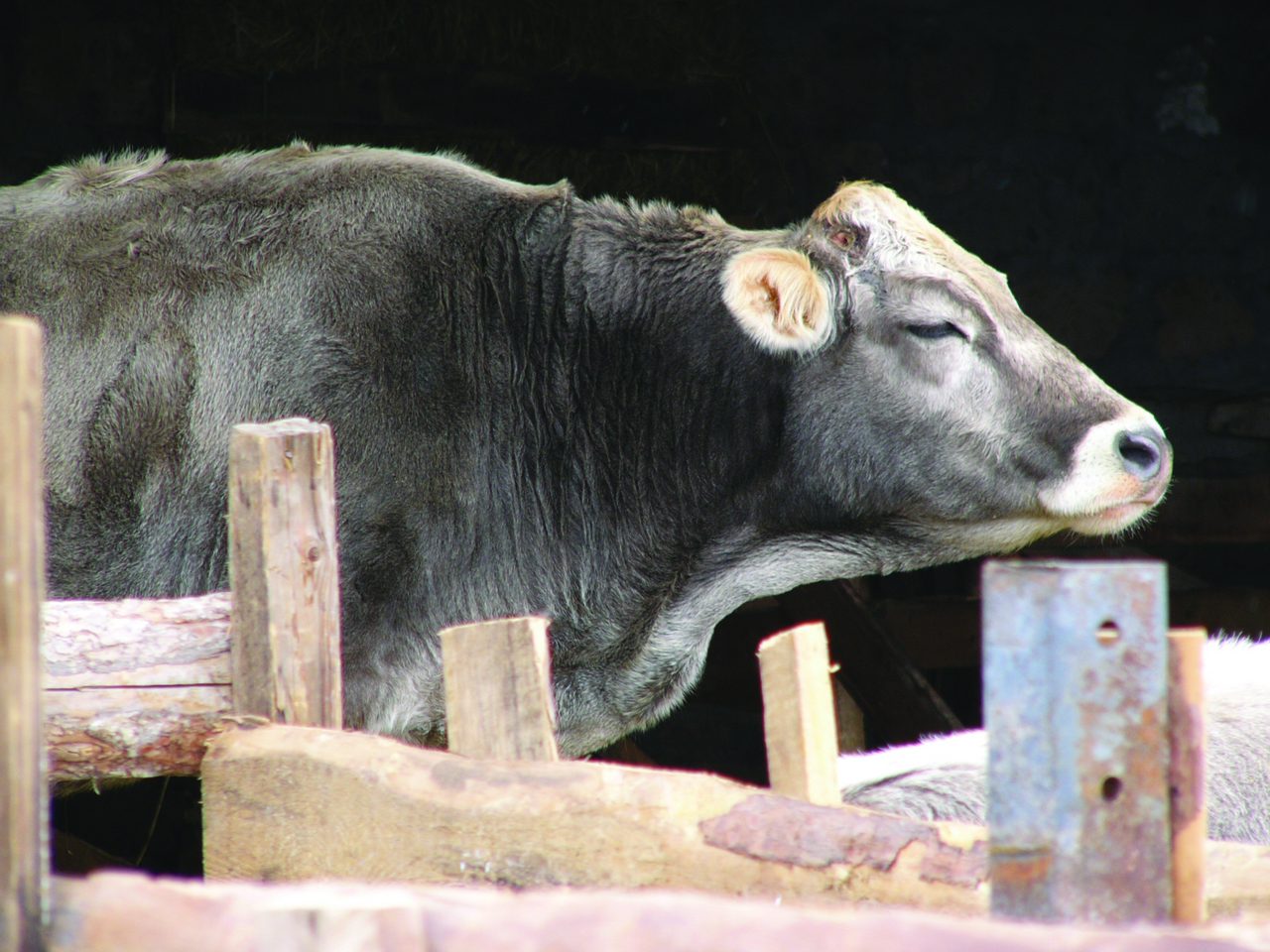
Point a smartphone camera at a cow in a Georgian pasture, and within seconds an app can suggest which of the country’s dozens of native breeds it belongs to. The same technology, aimed at a bird in a garden or an animal caught by a forest camera, can suggest its species. Both rely on the same underlying idea: an AI model that has learned to recognize an animal from its visual traits, the way an experienced breeder or naturalist would, but trained on thousands of reference photos instead of years of fieldwork.
How It Works
These tools are built on computer vision models — usually a neural network trained on a large library of labeled photos. During training, the model is shown thousands of images already tagged with the correct species or breed, and it gradually learns which combinations of visual features — coat pattern, horn shape, ear size, body proportions, plumage — correspond to which label. Most tools don’t start from scratch: they reuse a network already trained on millions of general images, then fine-tune it on a narrower, labeled set for the task at hand, a shortcut known as transfer learning.
When you submit a new photo, the model doesn’t return one certain answer. It ranks its best guesses by confidence — “80% likely X, 15% likely Y” — because visually similar breeds or closely related species can be genuinely hard to tell apart from a single photo, especially when the model has seen only a handful of examples of a rare one.
Detecting an Animal vs. Naming It
Identifying an animal is really two separate problems. First, something has to notice that an animal is even in the frame — useful when a single motion-triggered camera trap can generate millions of mostly empty images. Microsoft’s open-source MegaDetector, used by more than 80 conservation programs, handles this first step, flagging animals, people, and vehicles with roughly 95% accuracy. Only then does a second, more specialized model attempt the harder task: naming the exact species or breed. Splitting the job this way means one detector can feed dozens of different downstream classifiers — one for local birds, one for cattle, and so on.
What Limits Its Accuracy
Accuracy hinges on the training data. A species or breed with thousands of labeled reference photos gets identified reliably; one with only a handful does not — exactly the challenge FAO faces with rarer Georgian breeds that have never been systematically photographed before. Lighting, camera angle, and how visually distinct a species is from its relatives all affect the odds too, which is why these tools present ranked suggestions rather than a single verdict, and why a person still checks the result before it’s treated as fact.
Why It Matters
For conservation groups, this pipeline turns an unmanageable pile of camera-trap images into usable data — tracking population trends, flagging an endangered species’ presence, or catching signs of poaching, without months of manual sorting. In agriculture, the same approach helps document livestock genetics: knowing exactly which breed an animal is lets researchers track a population’s numbers, its genetic diversity, and how much of it survives.
That’s the problem FAO is now tackling in Georgia. Working with the country’s Scientific-Research Centre of Agriculture, the UN agency has been photographing indigenous cattle in Georgia’s mountain regions to build a labeled reference set — the basis for a planned mobile app that would let field workers photograph an animal and get an instant breed suggestion. The data will also feed FAO’s global Domestic Animal Diversity Information System, which already lists 48 breeds registered to Georgia.
Anyone curious to try the underlying technology on plants or wildlife rather than livestock can already do so: Seek by iNaturalist is a free app that identifies what your camera sees using a model trained on millions of iNaturalist citizen-science observations, covering roughly 30,000 species.
Why It Matters for Georgia
The push isn’t abstract. The Georgian Mountain, one of the country’s oldest cattle breeds, is adapted to harsh Caucasus winters and thin mountain forage — but its numbers have been falling for decades, from around 80,000 head in 1980 to under 30,000 by the mid-2000s, with no full count since. Without reliable data on which animals belong to which breed, it’s hard for breeders or regulators to know how much genetic diversity is actually left to protect. An AI tool that can confirm a breed from a phone photo, rather than relying on a scarce number of trained experts, makes that kind of nationwide survey realistic. This also connects to the conservation work happening well beyond Georgia’s borders, from camera-trap monitoring to endangered-species tracking.
In the News
For more on FAO’s Georgia project, read our brief: FAO Builds AI Tool to Identify Georgia’s Native Cattle Breeds.