Every AI story eventually drops a term — “token,” “RLHF,” “context window,” “hallucination” — as if the reader already knows what it means. This glossary defines the vocabulary that comes up most often, in plain language, with a link to a fuller explainer for each term.
The building blocks
Artificial intelligence (AI) is software that performs tasks — recognizing images, generating text, making predictions — that would otherwise require human judgment.
Machine learning is the main technique behind modern AI: instead of being programmed with explicit rules, a system learns patterns from examples.
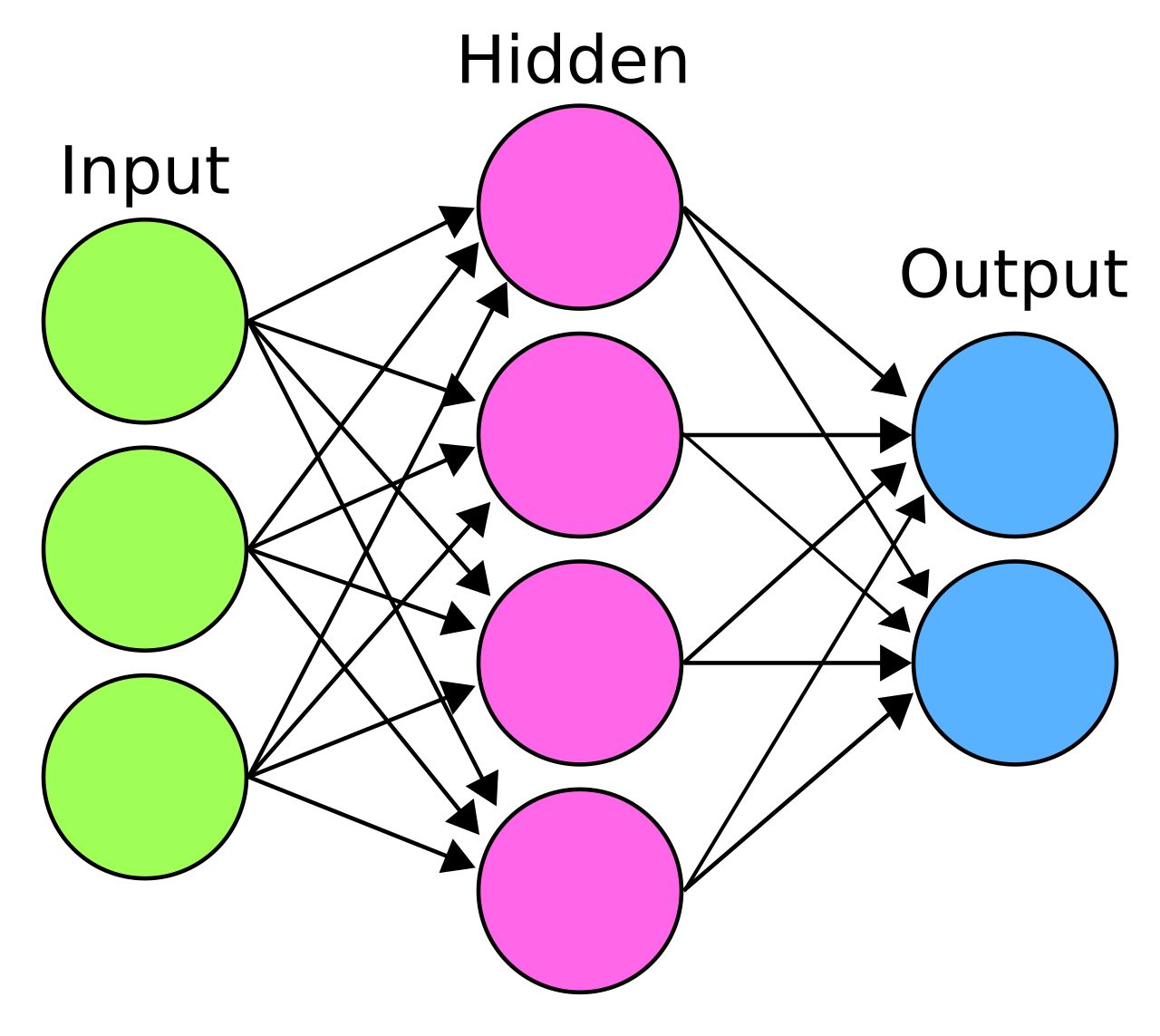
Neural networks are the structure most machine-learning systems are built from — layers of simple, connected units loosely modeled on neurons in the brain, each one nudging a calculation toward the right answer.
Large language model (LLM) is a neural network trained on huge amounts of text to predict the next word in a sequence — the technology behind ChatGPT, Claude, and Gemini.
Generative AI describes any AI system that creates new content — text, images, audio, code — rather than just classifying or predicting a number.
How a model learns
Training data is the material — text, images, code — a model learns from before it’s ever used. The quality and scope of that data shape what a model can and can’t do.
Parameters are the internal numbers a model adjusts during training to get better at its task; modern LLMs have anywhere from a few billion to over a trillion of them.
Fine-tuning is a second, smaller training pass that adapts an already-trained model to a specific task or domain, without starting from scratch.
RLHF (reinforcement learning from human feedback) is the technique labs use to make a model’s answers more helpful and less harmful, by training it on human rankings of which responses are better.
Terms you’ll hit using AI
Prompt is the instruction or question you type in; how you phrase it — prompt engineering — has a real effect on the quality of the answer.
Token is the small chunk of text — often a word or part of a word — that a model actually reads and generates; usage-based pricing is billed per token.
Context window is the amount of text a model can “see” at once — its prompt, the conversation so far, and any attached documents.
Hallucination is when a model states something false with total confidence, because it’s generating plausible-sounding text rather than looking facts up.
Multimodal describes a model that handles more than one kind of input or output — text, images, audio, video — in a single system.
Terms for building with AI
API (application programming interface) is how a developer plugs an AI model into their own app or website, rather than using it through a chat window.
AI agent is a system that doesn’t just answer a question but takes multi-step actions on its own — searching, writing code, calling other tools — to complete a task.
Terms about safety and trust
Alignment is the effort to make a model’s behavior match what its developers and users actually want, rather than pursuing its training objective too literally.
Bias is a systematic skew in a model’s outputs, usually inherited from patterns in its training data, that can disadvantage particular groups.
Want to go deeper?
Each term above links to a full explainer. A few more worth knowing: AI jailbreaking, AI red-teaming, retrieval-augmented generation (RAG), open-weight AI models, and AI reasoning models.
Sources: Definitions cross-checked against Wikipedia’s overview of machine learning and this site’s own explainer series linked throughout.