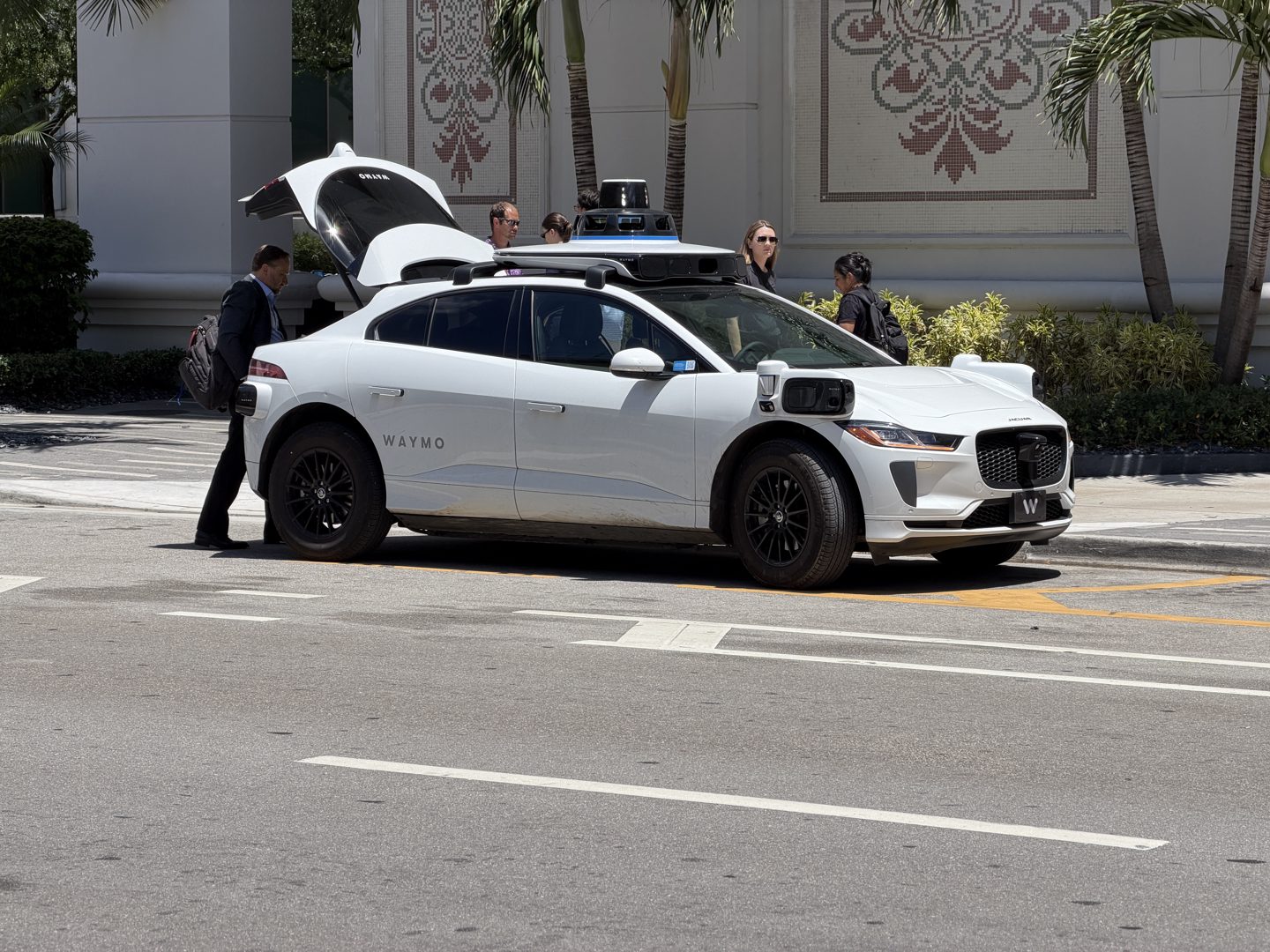
Waymo is a company that operates cars which drive themselves, with no human behind the wheel, and offers rides in them to the public through an app much like Uber or Lyft. It is a subsidiary of Alphabet, Google’s parent company, and it is the most widely used robotaxi service in the United States.
What Waymo is
Waymo began in 2009 as the Google Self-Driving Car Project, an internal research effort led by roboticist Sebastian Thrun. It spun out of Google in December 2016 as an independent Alphabet company named Waymo — a contraction of “a new way forward in mobility.” In October 2020, it became the first company to carry paying passengers in the U.S. with genuinely no one in the driver’s seat, in a service area around Phoenix, Arizona. Since then it has expanded to more than a dozen U.S. metro areas and, as of early 2026, was valued at roughly $126 billion after a $16 billion funding round.
Waymo doesn’t sell cars. Its vehicles — currently modified Jaguar I-PACE electric SUVs — are owned and operated by the company itself, and riders book trips the way they would with any ride-hailing app.
How the self-driving technology works
The software and hardware system that drives the car is called the Waymo Driver. Its current, sixth-generation version combines 13 cameras, four lidar units, six radar units, and external microphones mounted around the vehicle. Together these sensors build a constantly updating 3D picture of everything within roughly 300 meters of the car — other vehicles, pedestrians, cyclists, traffic signals, and debris — day or night and in most weather.
Cameras identify what objects are (a cyclist versus a parked bike, a red light versus a taillight), radar tracks how fast things are moving, and lidar measures precise distance and shape by bouncing laser pulses off surroundings and timing their return. Machine-learning models fuse these three data streams, compare them against a detailed pre-built map of the road, predict what nearby people and vehicles are likely to do next, and plan a safe path — recalculating many times per second. This is the same general approach used across physical AI systems, where software has to perceive and act in the real world rather than just generate text or images; our explainer on how AI powers self-driving cars covers the underlying techniques in more depth.
Because no human is supervising the drive, Waymo publishes its own safety data alongside independent research. Through roughly 220 million rider-only miles as of March 2026, the company reported 94% fewer crashes involving a serious injury and 82% fewer injury-causing crashes than a human-driving benchmark for the same roads. A separate 2024 analysis with insurer Swiss Re found 92% fewer bodily-injury insurance claims and 88% fewer property-damage claims. Independent evaluators, including the Insurance Institute for Highway Safety, have found broadly similar results, though researchers note Waymo’s own operating areas and conditions are more favorable than the U.S. average.
Where you can ride one
As of September 2026, Waymo runs driverless ride-hailing in cities including Phoenix, the San Francisco Bay Area, Los Angeles, San Diego, Denver, Tampa, Miami, Orlando, Dallas, Houston, San Antonio, and Nashville, plus Austin and Atlanta through a partnership with the Uber app. The company has said it plans further U.S. expansion along with its first international markets, Tokyo and London. Coverage inside each city is limited to a mapped service area, and rides are booked through the Waymo app, available on iOS and Android, which also shows which cities are currently live.
Waymo doesn’t publish a fixed price list — fares are calculated dynamically per trip, based on distance, time, and demand, similar to Uber or Lyft. Riders don’t tip, since there is no driver.
Why it matters
Waymo is the clearest large-scale proof that a computer can drive at least as safely as an average human across millions of real-world miles, not just in a lab or a demo. That has made it a reference point for regulators writing rules for autonomous vehicles, for automakers and rivals like Tesla and Amazon-owned Zoox deciding how to build their own systems, and for cities weighing how robotaxis change congestion, parking, and public transit use. Its expansion also illustrates a broader shift: AI that once lived mainly on a screen is increasingly steering, gripping, and navigating in the physical world.
In the news
Waymo’s most recent expansion is a case in point: see our report on Waymo launching service in Denver, San Diego, and Tampa.