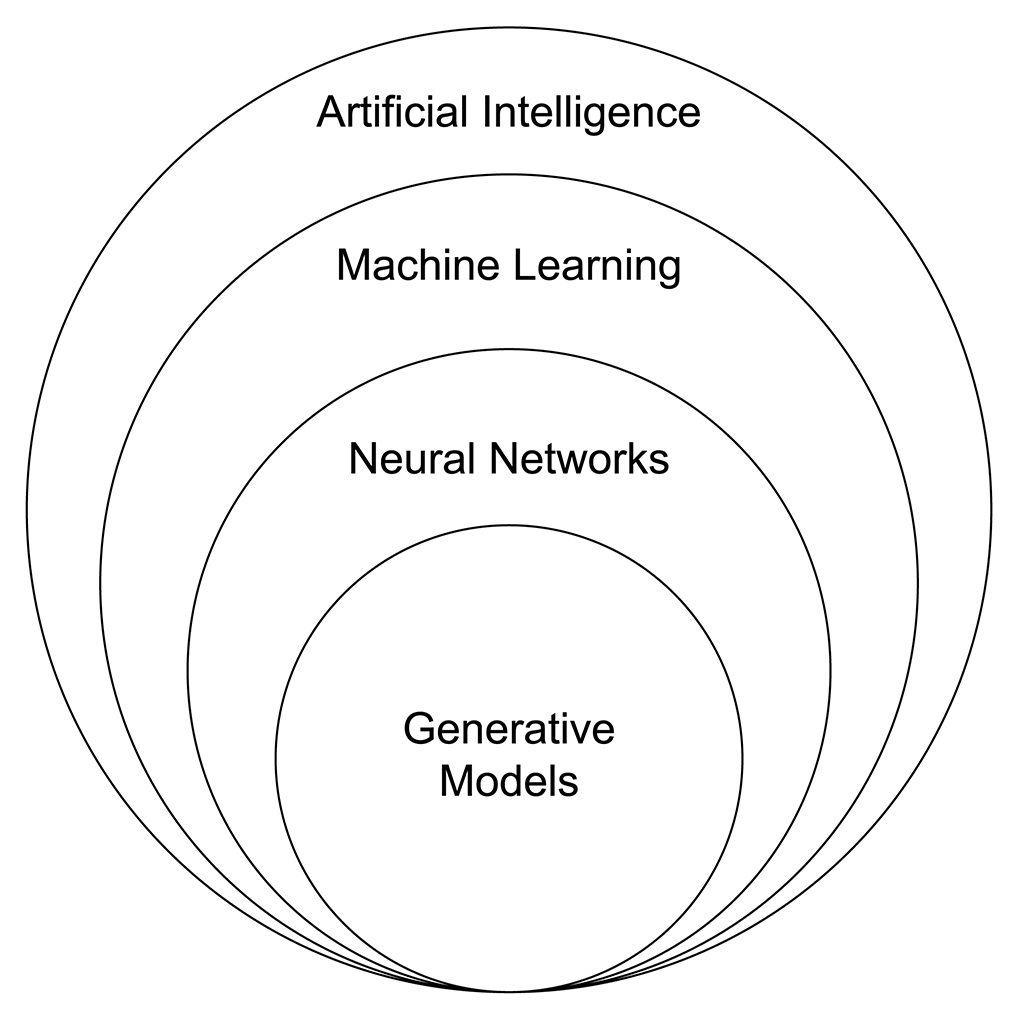
Synthetic data is information — text, images, sensor readings, medical records, driving footage — that is produced by an algorithm or another AI model instead of being collected from real people, real sensors, or real events. It is built to mimic the statistical patterns of genuine data closely enough to train or test an AI system, without corresponding to any single real record. It has quietly become one of the main ingredients AI labs use to train new models, alongside (and increasingly instead of) data scraped from the real world.
What “synthetic” actually means
Synthetic data is generated in a few different ways. The simplest is rule-based simulation: a self-driving car company can generate millions of miles of “driving” inside a game-engine simulator instead of filming real roads. Another is statistical resampling, where software creates new records that preserve the patterns of a real dataset — say, a hospital’s patient statistics — without reproducing any actual patient’s file. The fastest-growing method, though, is generative AI itself: using a large language model or an image- or video-generating model to produce fresh training examples — practice question-and-answer pairs, captioned images, synthetic conversations — that a second, usually smaller, model then learns from.
Why AI labs lean on it
Three pressures pushed synthetic data from a niche technique to a mainstream one. First, easily available, high-quality text on the open internet is running short relative to what today’s largest models can absorb, as covered in how AI models are actually trained from raw data onward. Second, real data is often legally or practically hard to use — patient records, financial transactions, and conversations with real users carry privacy and copyright exposure that synthetic stand-ins can reduce. Third, synthetic data is cheap to produce in exactly the quantity and shape a model needs, including rare situations — a rare disease, an unusual accident, an edge case in a legal contract — that would take years to collect naturally, and it can be labeled automatically instead of by hand.
The approach is no longer experimental. Microsoft’s Phi-4 model, released in December 2024, was trained largely on model-generated data rather than raw web text. Meta used its own Llama models to help caption training footage for its Movie Gen video generator. Anthropic has used AI-generated feedback, alongside human review, as part of how it trains Claude to follow its guidelines. Industry analyst Gartner projected in 2021 that more than 60% of the data used to train AI systems would be synthetic by the end of 2024 — a sign of how quickly labs expected to lean on it.
The catch: model collapse
Relying too heavily on synthetic data carries a specific risk researchers call model collapse: the gradual degradation of a model that happens when it is trained, generation after generation, on data produced by earlier AI models rather than on real-world data. Each time a model generates data and a new model learns from it, rare and unusual examples — the statistical “tails” that keep a model accurate on edge cases — get slightly thinned out, while common patterns get slightly reinforced. Repeat that cycle enough times without fresh real data mixed back in, and a model’s outputs can narrow and drift until they lose touch with reality. A 2024 study in Nature by Ilia Shumailov and colleagues showed this happening within just a few generations of models trained purely on each other’s output.
How labs try to avoid it
In practice, no major lab trains purely on synthetic data. The standard safeguard is to keep synthetic data as a supplement to a base of verified real-world data, not a replacement for it, and to filter or score synthetic examples against real benchmarks before they’re used. Some labs mix outputs from several different generator models rather than one, to avoid a single model’s blind spots compounding over generations. It is the same underlying concern that shows up when one company trains a new model directly on another company’s outputs — a related but distinct practice known as model distillation, which becomes a distillation attack when it’s done without permission.
In the news
That tension played out publicly when Anthropic accused Alibaba of harvesting Claude’s outputs at record scale to train a rival model — an example of the same underlying dynamic, where one AI’s generated output becomes another AI’s training data, but without the safeguards or consent that responsible synthetic-data use is supposed to involve.
Sources: NVIDIA’s synthetic data generation glossary; Shumailov et al., “AI models collapse when trained on recursively generated data,” Nature (2024); Gartner’s 2021 synthetic-data forecast, as reported by Tech Monitor.