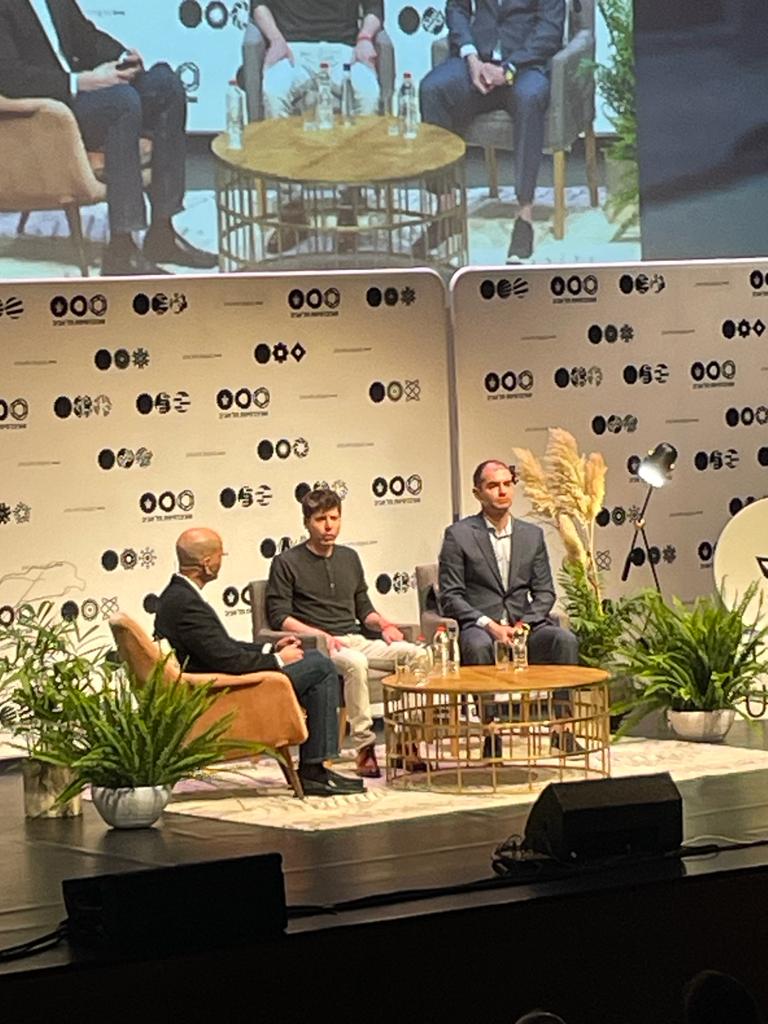
Safe Superintelligence Inc. (SSI) is a research lab founded in 2024 by Ilya Sutskever, OpenAI’s former chief scientist, with a single declared goal: build a safe superintelligence, an AI system that reliably exceeds human ability across virtually every cognitive task without threatening humanity in the process. SSI has shipped no product, sells nothing, and discloses almost nothing about its methods — yet Nvidia just invested $5 billion in it, pushing the two-year-old company’s valuation to roughly $32 billion.
What Safe Superintelligence Actually Is
SSI was founded in June 2024 by Ilya Sutskever, Daniel Gross (former head of AI at Apple), and Daniel Levy (a former OpenAI researcher), shortly after Sutskever left OpenAI following the brief 2023 attempt to remove CEO Sam Altman. The company is split between Palo Alto, California, and Tel Aviv, Israel, and describes itself as the world’s first “straight-shot” superintelligence lab: one goal, one product, no distractions. In practice that means no chatbot, no developer API, no sales team — just a small research group, reportedly around 50 people, working toward a single technical target without a roadmap of intermediate commercial products.
That target is superintelligence in the strict sense: an AI that surpasses the best human experts at essentially all cognitive work, a step beyond what most labs call artificial general intelligence. SSI’s founding premise is that safety has to be engineered in from the start rather than patched onto a system after it ships, which is why the company has stayed silent on its research even as competitors race to publish and productize.
How a Company With No Product Raises Billions
SSI raised roughly $1 billion in September 2024 from investors including Sequoia Capital, Andreessen Horowitz, DST Global, and SV Angel, at a valuation near $5 billion. By April 2025 a Greenoaks Capital-led round had pushed that valuation to about $32 billion, and Google Cloud agreed to supply the company with TPU computing capacity. Co-founder Daniel Gross left in July 2025 to lead Meta’s own superintelligence effort, leaving Sutskever as CEO alongside Levy.
Investors are betting on Sutskever’s track record rather than any visible product: he co-authored AlexNet, the 2012 breakthrough that helped launch the modern deep-learning boom, and was OpenAI’s chief scientist through the development of GPT-3 and GPT-4. In an industry where compute and talent are scarce and expensive, a founder with that pedigree can raise billions purely on the promise of what he might build next.
Why Nvidia Just Put $5 Billion In
On July 27, 2026, Nvidia announced a $5 billion investment in SSI, alongside access to Nvidia’s next-generation Vera Rubin computing platform — a combined CPU-GPU system Nvidia says will increase SSI’s available compute “by an order of magnitude.” The deal also marks a shift: SSI had leaned on Google’s TPUs for its early research and is now moving substantial capacity onto Nvidia’s chips. Nvidia CEO Jensen Huang framed the investment around Sutskever’s history of “fundamental breakthroughs at the foundation of modern AI,” while Sutskever said simply that SSI now has “research that is worthy of scaling up.”
The investment brings SSI’s total funding to roughly $7 billion and lifts its valuation to about $32 billion, all without a public release, a beta, or reported revenue.
Why It Matters
Nvidia investing directly in a company that will spend much of that money on Nvidia chips is part of a wider pattern — chipmakers taking equity stakes in the AI labs that are also their biggest customers, a dynamic sometimes called circular AI financing. It lets Nvidia lock in a relationship with a potential future frontier lab years before SSI has any product to sell, and it signals that Nvidia sees enough promise in Sutskever’s approach to bet billions on a team that, by design, isn’t racing to ship anything soon.
For the wider AI industry, SSI is a test of a contrarian idea: that the safest way to build superintelligence is to build nothing else in the meantime. Whether that approach produces a breakthrough, or simply proves that reputation and connections can raise unprecedented sums without a product, will shape how future AI labs balance safety research against the commercial pressure to launch.
In the news
For more on the deal itself, see our report on Nvidia’s $5 billion investment in Safe Superintelligence.