Natural language processing (NLP) is the branch of artificial intelligence that lets computers read, understand, and produce human language. It’s what happens, technically, whenever a spell-checker flags a typo, a voice assistant answers a spoken question, or a chatbot replies in full sentences. NLP is also one of the oldest fields in AI — decades older than today’s large language models (LLMs) — and it now spans everything from simple rule-based scripts to the massive neural networks behind tools like ChatGPT and Claude.
What counts as NLP
NLP covers any task where a computer has to work with human language rather than numbers or code. That includes breaking text into words and sentences (tokenization), figuring out grammatical structure (parsing), spotting names of people, places, and organizations (named entity recognition), judging whether a review sounds positive or negative (sentiment analysis), converting text between languages (machine translation), and answering questions or summarizing documents.
Most people use NLP daily without noticing it: spell-check and autocomplete, spam filters that read an email before you do, voice assistants like Siri and Alexa, search engines that interpret what you actually meant to type, and translation apps that convert a menu or a road sign in real time.
How it works
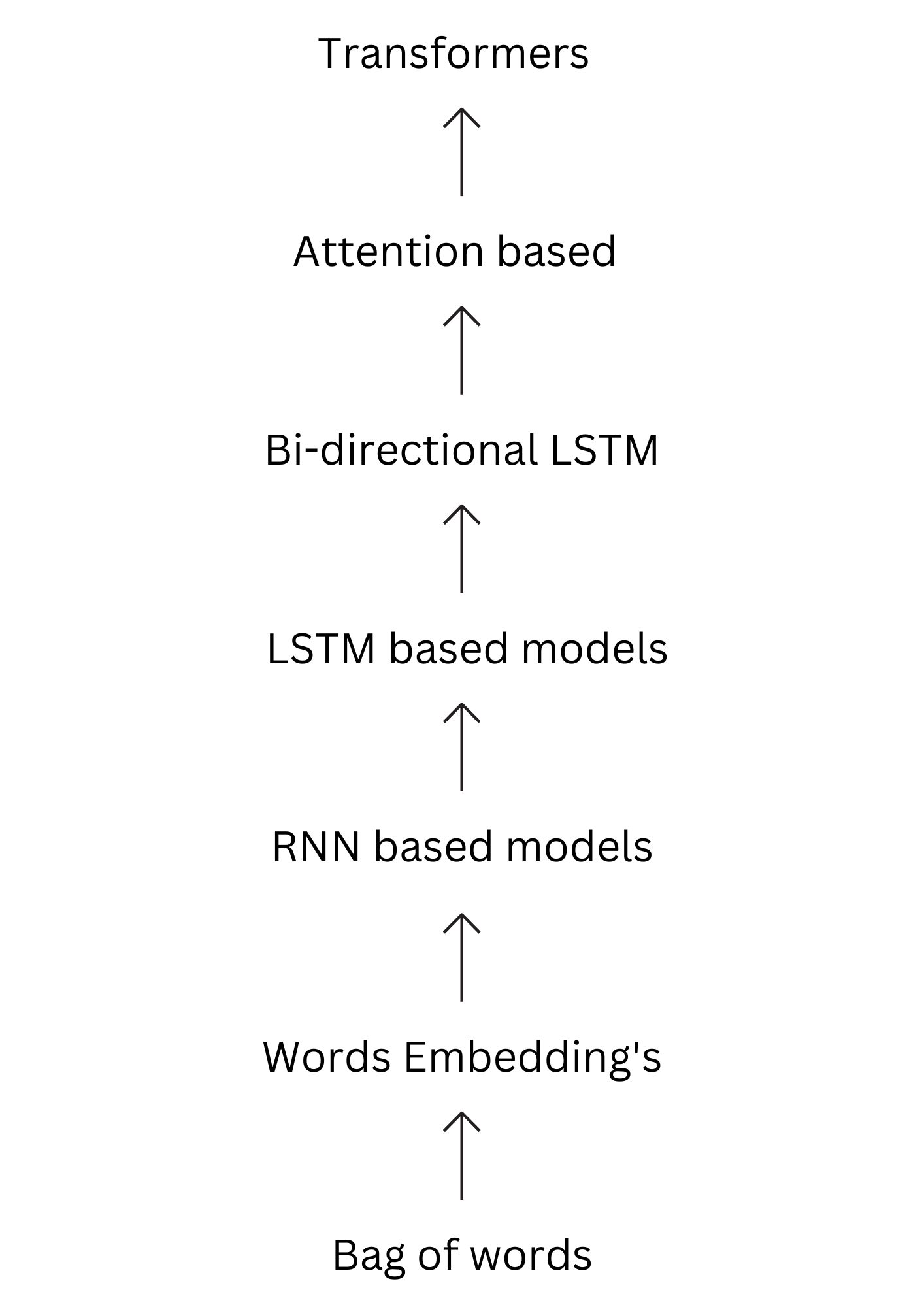
NLP started in the 1950s with hand-written rules — early machine-translation projects tried to convert Russian into English using dictionaries and grammar rules coded by linguists. That approach was brittle: language has too many exceptions to write rules for all of them. From the late 1980s, researchers shifted to statistical methods that learned patterns from large collections of text instead of following fixed rules, which handled real-world language far more robustly.
The next leap came from neural networks, and especially from the transformer architecture introduced in 2017. Transformers let a model weigh how every word in a passage relates to every other word at once, rather than reading strictly left to right. That made it possible to train models on enormous amounts of text and have them generalize to almost any language task — the breakthrough that directly enabled today’s large language models.
NLP vs. LLM — what’s the difference?
NLP is the field; an LLM is one kind of tool within it. NLP has existed since the 1950s and includes plenty of techniques that have nothing to do with deep learning — a keyword-based spam filter or a rule-based grammar checker is NLP, but it isn’t an LLM. A large language model, by contrast, is a specific type of neural network trained on huge amounts of text, and it happens to be so general-purpose that a single LLM can now translate, summarize, answer questions, and hold a conversation — tasks that used to require separate, hand-built NLP systems for each one.
That generality is why LLMs have come to dominate the field: instead of engineering a different pipeline for every task under the umbrella of natural language processing, a company can prompt one model to do most of them. Simpler, non-LLM NLP techniques are still widely used, though, wherever speed, cost, or predictability matter more than open-ended flexibility — think spam filters, form-field extraction, or basic search indexing.
Why it matters
NLP is the reason AI tools can be talked to at all. Every voice assistant, translation app, customer-support chatbot, and content-moderation system depends on it, and businesses increasingly use NLP-driven tools to route support tickets, pull structured data out of contracts, or summarize long reports automatically. Even the “chat” in ChatGPT is, underneath, an NLP interface — a large language model doing what NLP research has been working toward since the 1950s: getting a machine to actually understand what people write and say.
In the news
The newest generation of NLP systems keeps showing up as ever-larger language models. Moonshot AI’s Kimi K3, released as the company’s largest open-weight model yet, is a recent example of the transformer-based approach that now handles most modern NLP work.
Why it matters for Georgia
Georgian is a genuinely hard language for NLP. It’s agglutinative and split-ergative, with polypersonal verb agreement — a single verb root can generate thousands of grammatically valid forms — and it’s considered a low-resource language, meaning far less digital text exists to train and test models on than for English or other major European languages. Off-the-shelf NLP models and tools built mainly on English data tend to perform worse on Georgian as a result, which is part of why AI translation into and out of Georgian still lags behind higher-resource languages, even as dedicated Georgian-language corpora and tools slowly close the gap.
Sources: Natural language processing — Wikipedia.