Groq is an American semiconductor company that builds chips designed to run — not train — AI models, and it has nothing to do with Grok, the chatbot built by Elon Musk’s xAI. The two names are one letter apart and both sit inside the AI industry, which is why people mix them up constantly. Groq sells hardware and cloud infrastructure; Grok is the AI assistant that hardware might help run.
What Groq actually builds
Groq (pronounced like “broke”) was founded in 2016 by Jonathan Ross and Douglas Wightman, two engineers who had previously helped build Google’s Tensor Processing Unit, the chip Google uses to run its own AI workloads. At Groq, Ross set out to design a chip built only for inference — the step where an already-trained model answers a question — rather than the much heavier process of training a model from scratch.
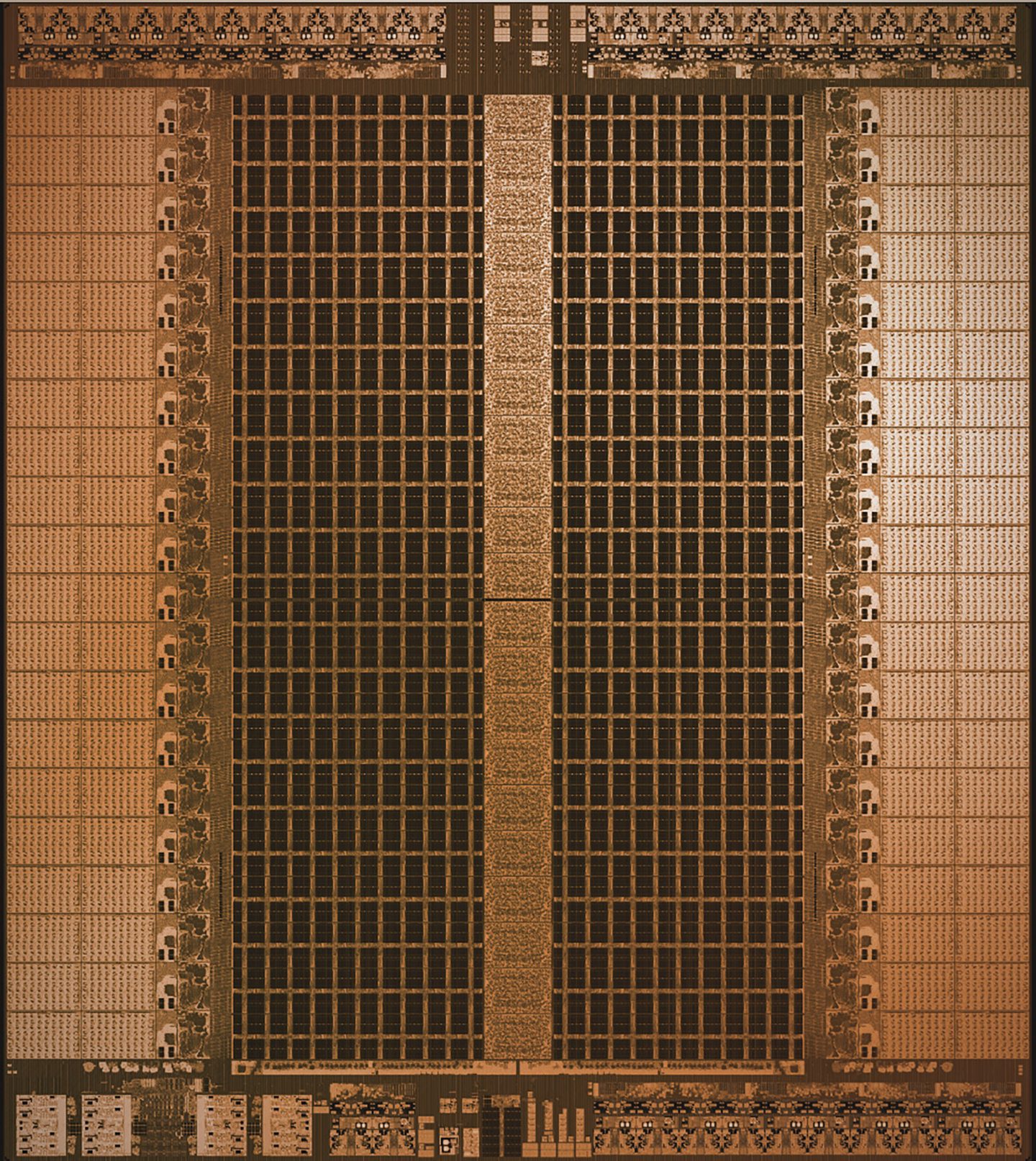
The result was the LPU, or Language Processing Unit: a chip whose data flow is fixed at compile time instead of scheduled on the fly. That predictability is what makes it fast — because every operation lands on a known clock cycle, Groq’s systems can generate responses at very low latency, often well ahead of general-purpose chips on public speed benchmarks. Developers reach that speed through GroqCloud, the company’s hosted API, which runs open models such as Meta’s Llama and OpenAI’s open-weight GPT-OSS rather than a model Groq built itself.
How an LPU differs from a GPU
A graphics processing unit schedules work dynamically and was built to handle a wide range of tasks, from video game rendering to model training. An LPU is narrower by design: it does one job, running inference for language models, and trades away flexibility for speed and energy efficiency. Groq has reported roughly ten times better energy efficiency than comparable GPU-based inference on some workloads. That trade-off — a chip that can’t train a model but can run one very fast and cheaply — is why Groq long positioned itself as a complement to, not a replacement for, Nvidia’s GPUs, which still dominate AI training.
Where the Grok confusion comes from
The mix-up isn’t entirely accidental. Groq trademarked its name in 2016, years before xAI launched its chatbot Grok in 2023, and later sent xAI a cease-and-desist letter over the similarity. Neither company changed its name, so the confusion persists: Groq is infrastructure a chatbot could run on; Grok is a chatbot, comparable to ChatGPT or Claude, that a person talks to directly. One is mostly invisible to end users; the other is the product people interact with.
The Nvidia deal that reshaped the company
Groq reached unicorn status in 2021 and a $2.8 billion valuation by August 2024. It kept raising: a $1.5 billion Saudi-backed infrastructure commitment in February 2025, then $750 million at a $6.9 billion valuation that September. The biggest shift came on December 24, 2025, when Nvidia — under CEO Jensen Huang — agreed to pay roughly $20 billion for a non-exclusive, perpetual license to Groq’s LPU technology and to hire most of its senior team, including founder Jonathan Ross. Groq was not acquired outright; it kept operating independently under a new CEO, Simon Edwards, while regrouping around its inference-cloud business and raising a further $650 million by mid-2026.
How to try it yourself
Anyone curious can test Groq’s speed directly: GroqCloud offers a free API key to start, then usage-based pricing as you scale. As of July 2026, per Groq’s pricing page, Llama 3.3 70B costs $0.59 per million input tokens and $0.79 per million output tokens, with smaller models priced lower. For a developer comparing providers, GroqCloud is worth evaluating on raw response speed rather than model quality, since it hosts other labs’ models rather than one of its own.