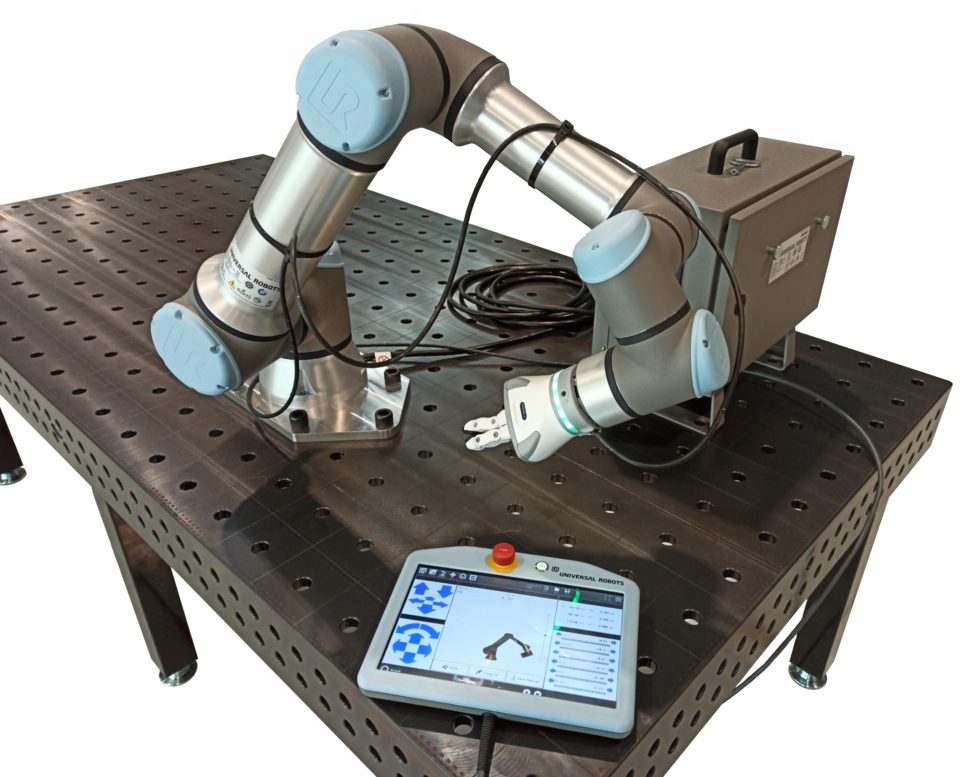
Edge AI is artificial intelligence that runs its calculations on the device collecting the data — a camera, a robot, a factory sensor — instead of sending that data to a remote server and waiting for an answer. The term comes from edge computing: placing computing power physically at the “edge” of a network, close to where information is generated, rather than centralizing it in a cloud data center that might be hundreds of miles away.
What Makes AI “Edge” AI
Most AI people use day to day — a chatbot, an image generator, a search assistant — runs in the cloud. A prompt travels over the internet to a data center, a large model processes it, and the answer comes back, typically in anywhere from tens of milliseconds to a few seconds. That’s fine for a conversation.
Edge AI skips the trip. A model, usually a smaller version built specifically for one task, runs on a chip physically inside or next to the device doing the work. This is related to on-device AI — the term for phones and laptops that run AI features locally for privacy and battery life — but edge AI is the broader, industrial cousin. It covers factory equipment, delivery drones, security cameras, self-driving cars, and robots as much as consumer gadgets, and it’s built around a different priority: not just privacy, but split-second reliability in places where losing an internet connection can’t be allowed to stop the machine.
Why Robots Can’t Wait for the Cloud
A chatbot that takes an extra second to reply is a minor annoyance. A robot that takes an extra second to notice a person has stepped into its path is a safety hazard. Robotics runs on tight control loops — sense, decide, act, repeat — often dozens or hundreds of times per second, and each loop has to close before the physical world moves on. Sending every cycle to a distant server and waiting for a reply would make real-time control impossible, and a dropped connection would leave the machine blind at the worst moment.
Edge AI solves this by putting sensing, reasoning, and control decisions on hardware the robot carries with it. A cloud connection, where one exists, is reserved for tasks that can tolerate delay — software updates, longer-term learning, coordinating a fleet — while the moment-to-moment decisions that keep a robot from colliding with something happen locally, in microseconds.
The Chips Doing the Work
Edge AI depends on specialized hardware built to run AI models using far less power and space than a data-center GPU. The core component is usually a neural processing unit (NPU) — a chip designed specifically for the math behind AI inference — paired on the same board with a general-purpose CPU and sometimes a GPU or a reconfigurable FPGA, so one system can handle everything from camera image processing to motor control.
AMD’s new Kria AI system-on-module, launched alongside a robotics developer platform, is a current example: it combines a CPU, GPU, NPU, and FPGA on a single board aimed at physical AI tasks, and AMD says it can process more than 8,000 control decisions per second — a fresh decision roughly every 125 microseconds — while keeping perception-to-action reasoning under 100 milliseconds. Nvidia’s Jetson line, the more established option on the market, targets similar work; its entry-level Jetson Orin Nano Super developer kit sells for $249 as of July 2026, per Nvidia’s pricing page, while boards built for heavier industrial robotics cost substantially more.
None of this hardware needs to be exotic to be useful. Developer kits well under $300 can already run real-time object detection or navigation models — Nvidia’s Jetson AI Lab has a getting-started guide for anyone who wants to try one — which is why edge AI has spread past factories into robot vacuums, drones, and smart cameras that decide what they’re looking at without ever calling home.
In the news
AMD’s new Kria AI robotics developer platform is a direct example of this shift: a single board meant to give robot builders perception, reasoning, and real-time control in one integrated system, competing with Nvidia’s Jetson line as robots move from research labs onto factory floors and city streets.