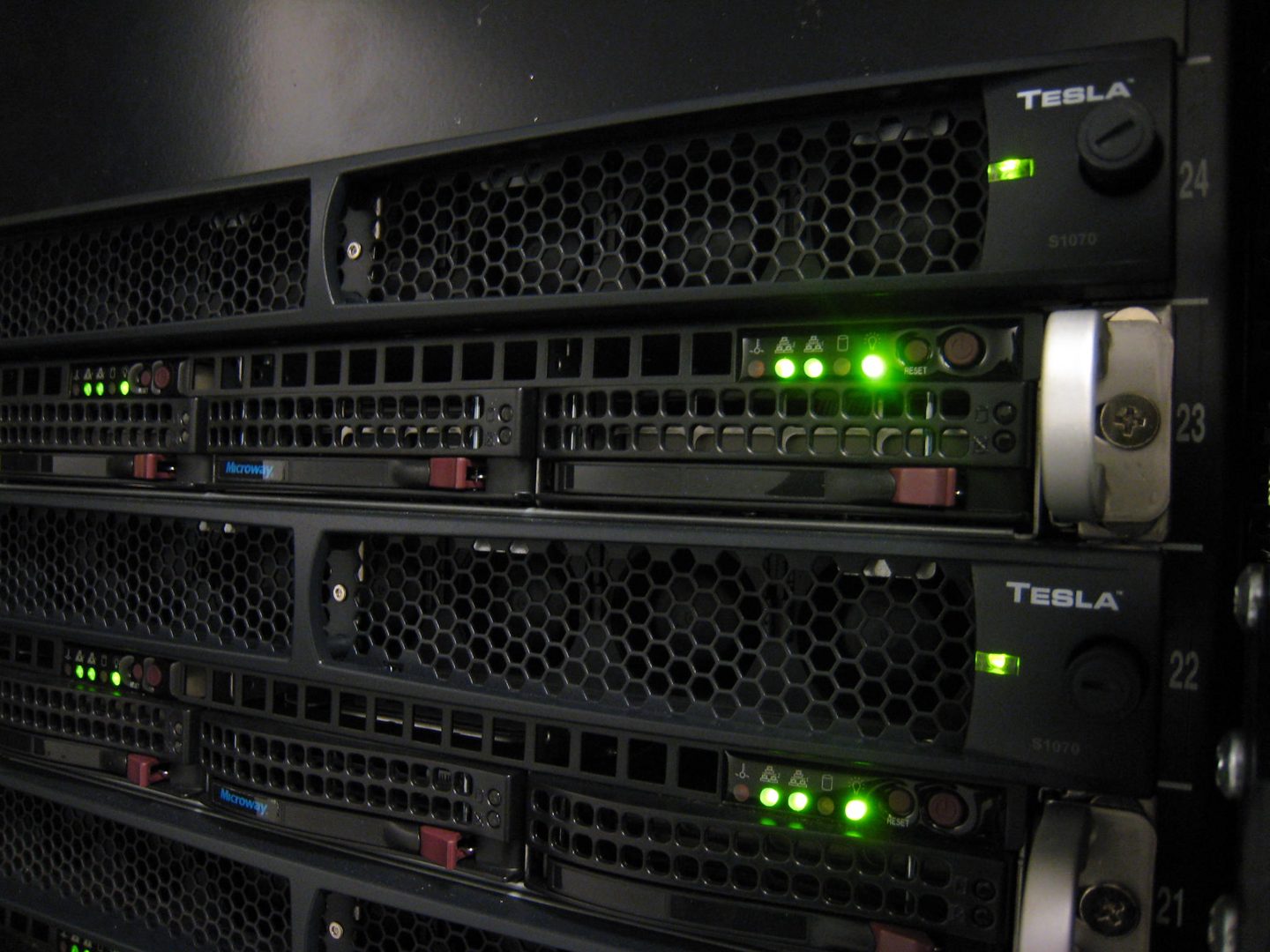
An AI factory is a computing facility built for one job: running the full life cycle of AI models — ingesting data, training, fine-tuning, and then running inference at high volume — as efficiently as possible. Unlike a general-purpose data center, which might run anything from email servers to websites, an AI factory’s only output is intelligence, measured in tokens generated per second rather than in generic compute cycles.
What makes it a “factory”
The term comes from Nvidia, which popularized it to describe a new category of infrastructure. In a traditional factory, raw materials go in one end and a finished product comes out the other. Nvidia applies the same framing to AI: raw data goes in, and the facility’s GPUs, networking, and software turn it into a stream of tokens — the words, code, images, or predictions an AI model produces. Nvidia’s own definition describes an AI factory as infrastructure “designed to create value from data by managing the entire AI life cycle,” with its output measured by token throughput rather than by disk space or CPU cycles.
That framing matters because it changes what gets optimized. A conventional data center is judged on uptime and cost per server. An AI factory is judged on tokens produced per watt and per dollar, because every token has an economic value once it becomes an answer, an image, or an automated decision.
How it differs from a regular data center
Three things typically set an AI factory apart:
- Density and power. AI factories pack far more compute — and draw far more electricity — per rack than a conventional data center, because training and running large models is extremely power-hungry. Some newly announced facilities plan for well over 100 megawatts of capacity, roughly enough to power a small city.
- Specialized hardware. Instead of general-purpose servers, an AI factory is built around GPUs (or similar AI accelerators), high-bandwidth memory, and fast interconnects like Nvidia’s NVLink or InfiniBand networking, so thousands of chips can work on the same model as if they were one machine.
- A single workload. A data center is workload-agnostic; an AI factory is tuned end-to-end for AI — from the data pipeline through training to inference — often run by the same company that built or trained the model.
Some of the newest AI-focused facilities are also called neoclouds — companies that rent out this GPU-heavy infrastructure to others rather than running their own models on it. A neocloud is essentially an AI factory offered as a rental service.
Why it matters
AI factories are becoming a matter of national and corporate strategy, not just a data-center upgrade. Companies building their own frontier models — and increasingly governments — are investing billions of dollars in dedicated AI factories because renting compute from someone else means depending on that provider’s capacity and priorities. That’s the same logic behind sovereign AI projects, where a country builds or funds its own AI infrastructure so its data, models, and compute capacity stay under domestic control.
The economics are also becoming central to how AI companies plan for the future. Because token throughput is now treated as a factory’s “production output,” the efficiency of an AI factory — tokens generated per dollar of power and hardware spent — increasingly determines which AI providers can offer their models cheaply and which cannot.
In the news
Japan recently became the site of what Nvidia and Japanese officials call the world’s first national AI factory: a state-tendered facility using 27,500 Rubin GPUs to train open foundation models for robotics and industrial automation, run through a public consortium rather than a single company. Read our report on Nvidia and Japan’s national AI factory.
Sources: Nvidia Glossary — What Is an AI Factory; Nvidia Newsroom — Japan’s national AI infrastructure.