AI drug discovery is the use of machine learning models to find, design, and test candidate medicines faster and more cheaply than traditional lab-by-lab chemistry. Instead of scientists manually testing thousands of molecules against a target, AI systems predict which molecules are likely to work before a single one is synthesized — compressing years of trial and error into weeks.
Why drug discovery needed a shortcut
Developing a single new drug traditionally takes 10 to 15 years and costs roughly $2.6 billion on average, according to a widely cited Tufts Center for the Study of Drug Development analysis. Most of that time and money is spent before a drug ever reaches a patient: identifying a biological target, designing molecules that hit it, and weeding out candidates that turn out to be toxic or ineffective. Roughly 90% of drug candidates that enter human clinical trials still fail — usually because they don’t work as hoped or cause unacceptable side effects, problems that ideally should have been caught earlier. AI’s promise is to catch more of those failures before they become expensive.
How it works
Drug discovery with AI generally moves through a few stages, each now assisted by a different kind of model:
- Target identification. Machine learning models sift through genetic, clinical, and scientific-literature data to flag which proteins or genes are plausibly driving a disease — narrowing thousands of possibilities to a shortlist worth pursuing.
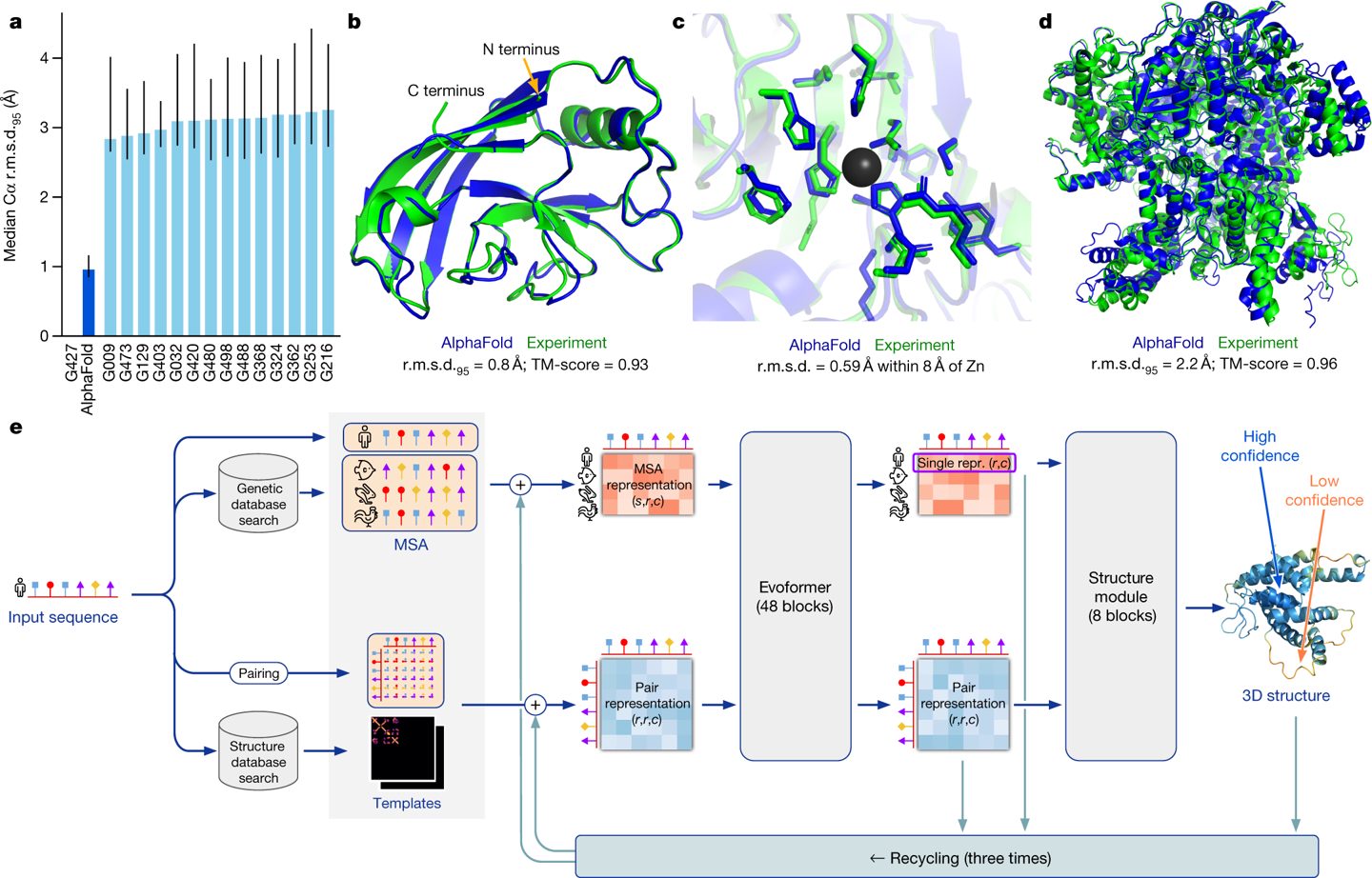
- Structure prediction. Once a target protein is chosen, researchers need to know its 3D shape, since a drug has to physically fit into it like a key into a lock. This used to require slow, expensive lab techniques such as X-ray crystallography. AlphaFold, the AI system built by Google DeepMind, changed that by predicting the 3D structure of a protein directly from its amino acid sequence — work that earned its creators a share of the 2024 Nobel Prize in Chemistry.
- Generative molecule design. With a target’s shape in hand, generative AI models propose new molecules likely to bind to it, rather than searching through an existing chemical library. In one published example, this pipeline took a cancer-related target (CDK20) from selection to a working inhibitor compound in about 30 days, after synthesizing only seven candidate molecules — a process that traditionally involves testing hundreds.
- Property prediction. Before any molecule is made in a lab, models estimate how it will behave in the body — whether it will be absorbed, how it will be broken down, and whether it looks toxic — filtering out likely failures early.
What AI does not yet do is replace the clinical trial itself. A model can suggest a promising molecule, but it still has to be manufactured and tested for safety and effectiveness in animals and then in humans, a slow, tightly regulated process no algorithm can skip.
Why it matters
Even modest gains compound: if AI trims a few years off the preclinical stage, or raises the odds that a candidate entering trials actually works, that can mean cheaper medicines and faster treatments for diseases that currently have none. It’s also why large pharmaceutical companies are moving from experimenting with these tools to embedding them directly in their drug pipelines — signing multi-year deals with AI-first biotech firms rather than treating AI as a side project.
In the news
That shift is visible in Chai Discovery’s $400 million Series C round, which valued the AI drug-design startup at $3.8 billion after it struck commercial deals with major drugmakers — a sign of how quickly AI-designed molecules are moving from research papers into real pharmaceutical pipelines.
Sources: Tufts Center for the Study of Drug Development, via Nature Reviews Drug Discovery; AlphaFold Accelerates AI-Powered Drug Discovery, Chemical Science; FierceBiotech on Chai Discovery’s Series C.