A tabular foundation model is an AI system trained to make predictions directly from rows-and-columns data — customer records, transaction logs, inventory sheets, insurance claims — without being retrained from scratch for every new dataset. Where a large language model like the one behind ChatGPT predicts the next word in a sentence, a tabular foundation model predicts the next value in a spreadsheet: will this customer churn, will this invoice be paid late, how much of this product will sell next month.
What it is
Most of the data that runs a business was never meant to be read as prose. It lives in tables: a column for customer ID, a column for order size, a column for whether the account later canceled. For over a decade, the standard way to predict outcomes from that kind of data was gradient boosting — an approach used by tools like XGBoost and LightGBM, which are still common in data science teams. It works well, but it means training a fresh model, with its own feature engineering and tuning, for every single dataset.
A tabular foundation model (TFM) takes a different approach, borrowed from how large language models generalize across topics they were never explicitly taught. Instead of learning one narrow task, it is pretrained once on a huge variety of data, then applied to new, unrelated tables without retraining. The best-known example is TabPFN, built by the German startup Prior Labs — research published in the journal Nature that has set state-of-the-art results across hundreds of independent academic tests, and which SAP cited as its reason for acquiring the company in a deal worth over €1 billion.
How it works
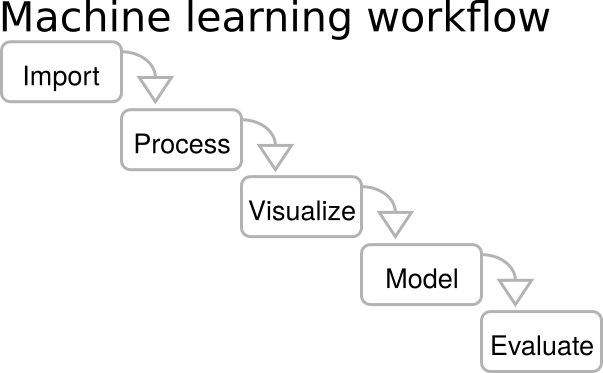
A conventional machine learning pipeline trains a new model on your specific dataset, which typically takes hours of feature engineering and hyperparameter tuning before it can predict anything. A tabular foundation model skips that step. It was pretrained — once, in advance — on millions of synthetic tables covering countless statistical patterns, so it has already “seen” the general shape of tabular problems before it ever sees your data.
To use it, you feed the model your raw table, including the rows you want it to predict, and it returns an answer in a single pass — no separate training run, no manual handling of missing values or mismatched data types. TabPFN’s latest version handles tables of up to 50,000 rows and 2,000 columns, and on the TabArena benchmark it matches results that would otherwise take an automated machine-learning pipeline several hours to reach — collapsing what used to be an overnight job into a query that returns in seconds. Prior Labs publishes the model and its documentation for anyone who wants to try it directly on their own data.
Why it matters
Generative AI headlines are mostly about text, images, and code, but a large share of the data businesses actually run on — payment histories, supply chains, claims records, sensor logs — is tabular, not conversational. That is the bet SAP is making with its push into enterprise AI: its chief technology officer said the company sees structured business data, not chatbots, as “the greatest untapped opportunity in enterprise AI.” A faster, more accurate way to predict churn, fraud, delivery delays, or demand forecasts plugs directly into software that companies already use for accounting, logistics, and customer management — without requiring every business to hire a data science team to build and retrain a model for each new question.
That doesn’t make tabular foundation models a replacement for large language models — they solve a different problem. An LLM reasons over language; a tabular foundation model reasons over structured records. The two are increasingly paired: an AI agent might use an LLM to understand a request in plain English, then call a tabular model to actually run the prediction against a company’s database.
In the news
SAP completed its acquisition of Prior Labs in July, committing to invest more than €1 billion over four years to build it into what the company calls a leading frontier AI lab for structured data — see our coverage of the deal.
Sources: Foundation model — Wikipedia · Gradient boosting — Wikipedia · SAP: SAP to Acquire Prior Labs · Prior Labs documentation