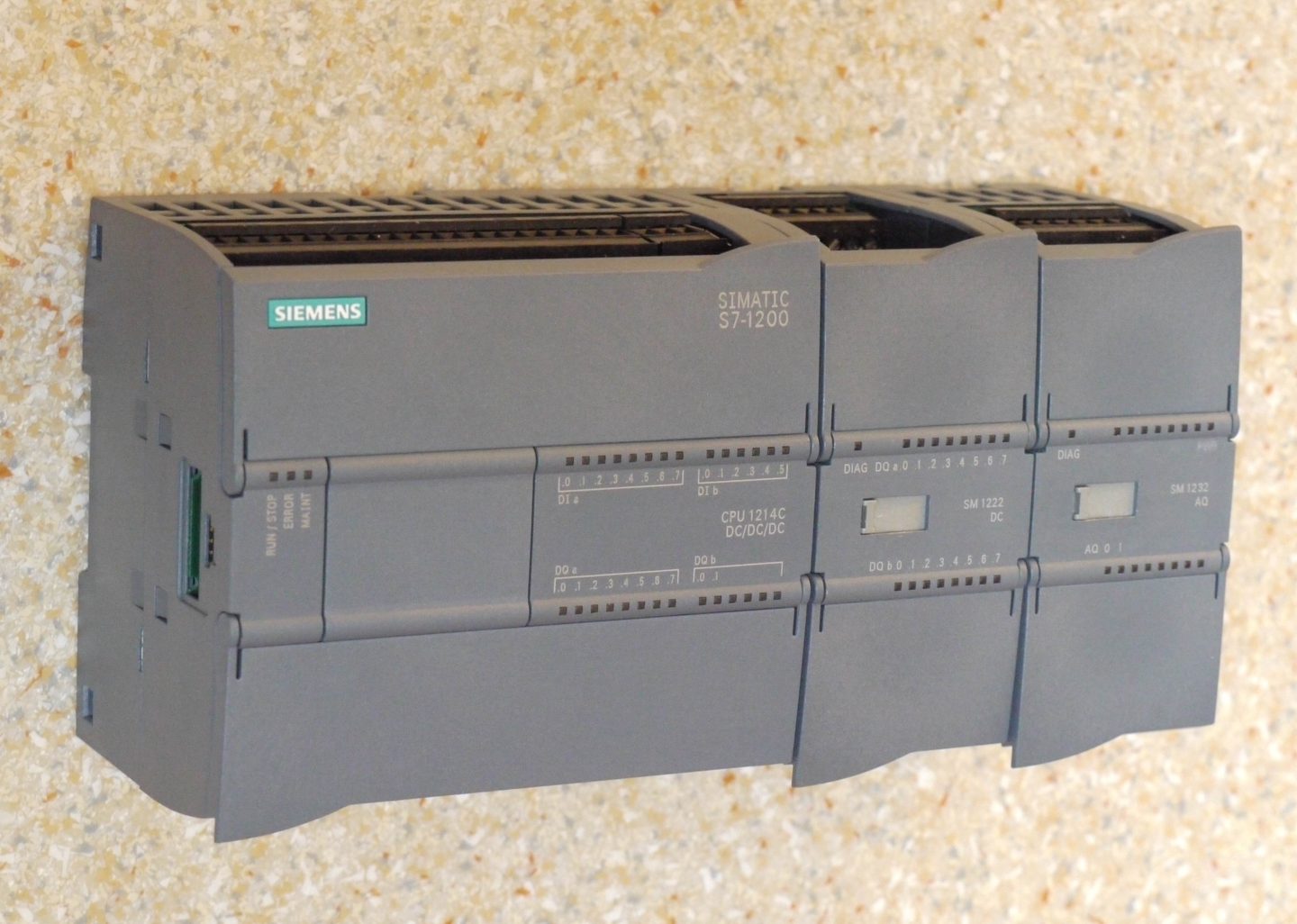
When US cybersecurity agencies say hackers are using artificial intelligence to write exploits for a Siemens PLC, the natural question is the most basic one: what is a PLC, and why would anyone bother attacking it? A programmable logic controller is the small, ruggedized computer that runs the physical world — opening valves, driving conveyor belts, dosing chemicals, switching power relays — inside factories, water plants, and power substations. AI doesn’t change what a PLC is; it changes how quickly and cheaply someone can find and abuse the weaknesses that were already there.
What a PLC actually does
A programmable logic controller is an industrial computer built to survive heat, dust, vibration, and years of uninterrupted operation — conditions that would kill an ordinary desktop PC. Instead of running a browser or a spreadsheet, it runs a small, continuously looping program (often written in “ladder logic,” a style that mirrors electrical relay diagrams) that reads sensors and drives motors, pumps, valves, and switches in real time. Siemens’ S7 family — the S7-200, S7-300, S7-400, S7-1200, and S7-1500 — is one of the most widely deployed PLC lineups in the world, found in everything from bottling lines to water-treatment plants to power substations.
Why they’re hard to protect
For decades, PLCs were considered safe by isolation: they sat on private factory networks, physically separate from the internet, so their communication protocols were designed for reliability and real-time speed rather than security — many older models offer weak or no authentication by default. As plants connected control systems to corporate networks and remote-monitoring dashboards for convenience, thousands of PLCs ended up reachable from the open internet. Attackers now use internet-scanning services — search engines for exposed devices, not people — to find controllers sitting online with outdated firmware or default credentials.
What changes when AI writes the exploit
Talking to a PLC over its native protocol used to require someone who had studied vendor documentation and reverse-engineered the communication format by hand. AI models can now read that same public documentation and open-source libraries and generate working scripts that read and write a controller’s memory, configuration, and control program — often packaged to look like legitimate industrial-monitoring software. The vulnerability isn’t new: the exposed devices and weak authentication were already there. What AI changes is the cost of weaponizing them — a task that once needed a specialist in industrial-control systems can now be scripted by attackers with far less specialized knowledge, faster and more cheaply.
Why critical infrastructure raises the stakes
A compromised website leaks data; a compromised PLC can move real machinery. US agencies have named critical manufacturing, energy, water and wastewater systems, chemical processing, food and agriculture, commercial facilities, and the defense industrial base as the sectors most exposed to this kind of campaign — the critical infrastructure whose failure has physical, not just financial, consequences: a mis-dosed chemical, a stuck valve, a tripped relay. That’s what separates industrial-control security from ordinary IT security, and why a PLC exploit draws a different kind of urgency than a stolen customer database.
What defenders are doing about it
The mitigations security agencies recommend are unglamorous but concrete: inventory every internet-facing device, apply the latest firmware and security patches, remove direct internet exposure by routing remote access through a properly segmented and authenticated network, enforce strong credentials in place of defaults, and monitor traffic for the kind of unusual read/write activity these scripts generate. None of it requires AI to counter AI — it requires the basic network hygiene that industrial operators have been urged to adopt for years, now with more urgency.
This episode is a narrower, more concrete case of the broader pattern explained in what AI in cybersecurity actually changes for defenders and attackers — AI lowering the cost of attack faster than it lowers the cost of defense. It’s also worth distinguishing from agentic malware, where an AI system decides and acts on its own: here, a human attacker is still directing the campaign, just with AI doing the scripting.
In the news
For the specifics of the current advisory — which agencies issued it and what they recommend — see our report on the Siemens PLC warning.