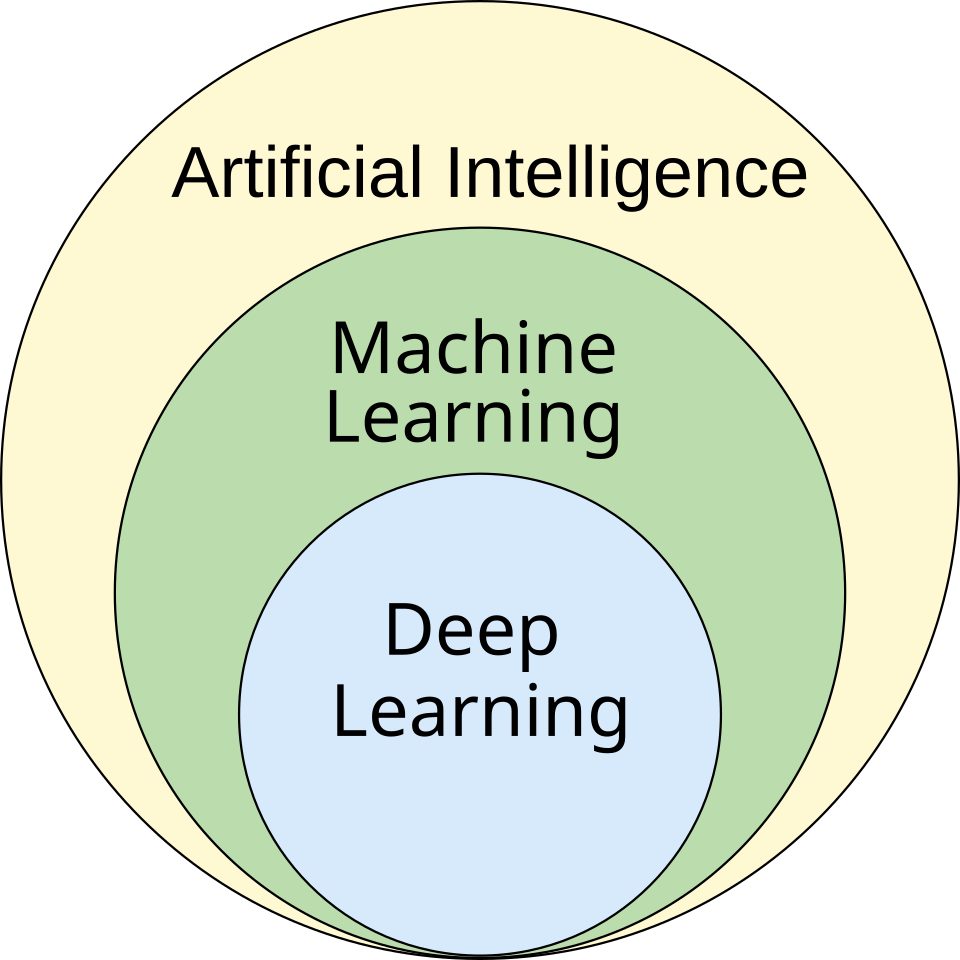
A foundation model is a large AI system trained on a broad swath of data — text, images, code, or several of these at once — so a single trained model can be adapted to many different jobs instead of being built for just one. GPT, Gemini, Claude, and Llama are all foundation models; so are image generators like Stable Diffusion and the growing number of models built specifically for writing code. A large language model is simply the text-only branch of this family: every LLM is a foundation model, but not every foundation model is an LLM.
What Makes a Model a “Foundation”
Stanford researchers coined the term in an August 2021 report, “On the Opportunities and Risks of Foundation Models”, choosing “foundation” over alternatives like “pretrained model” because it captured something specific: these models are trained once, at large scale, and then serve as the base that many separate applications get built on top of.
Two things define one. First, it learns from broad, mostly unlabeled data through self-supervised learning — the model generates its own training signal, such as guessing a hidden word from its surrounding context, instead of needing humans to hand-label millions of examples. Second, the result is general enough to be adapted to a wide range of downstream tasks — translation, summarization, writing code, describing an image — without retraining from zero.
Not every machine learning model qualifies. A spam filter trained to do one narrow job is not a foundation model; it was never built to do anything else. What makes a model “foundational” is that its scale and generality let it become the base layer under many separate products.
How Is It Different From an LLM?
A large language model predicts language — the next word, sentence, or answer in a conversation. That makes every LLM a foundation model, but the category is bigger. It also covers models trained purely on images, on audio, on video, on protein structures, or on robot sensor data, plus multimodal models like Gemini or GPT-4o that read text, images, and audio together. Our explainer on large language models covers the text-specific branch in more depth.
From Pretraining to Adaptation
Building a foundation model happens in two stages. Pretraining is the expensive part: a lab feeds the model an enormous, broad dataset and lets it learn general patterns, at a cost that can run into the hundreds of millions of dollars for the largest models. Adaptation is the cheap part: the same pretrained model can then be fine-tuned, aligned with human feedback, or simply prompted through an API to perform one specific task — turning a single foundation model into a chatbot, a customer-service agent, or a coding assistant, without training anything from scratch.
That reuse is the economic logic behind the whole approach. Some labs also build their foundation models with a mixture-of-experts architecture, splitting the network into specialized sub-networks so only a fraction activate for any given request — keeping a very large model cheap enough to actually run.
Why It Matters
Nearly the entire AI industry now sits on top of a small number of foundation models. Chatbots, search assistants, coding tools, and image generators are mostly thin applications wrapped around one of a few dozen base models built by a handful of labs — which is a large part of why so much industry debate centers on who controls those models and whether their weights should be open or closed. Regulators have taken notice too: the EU AI Act regulates this same category under the name “general-purpose AI model,” with added obligations once a model crosses a set compute threshold.
In the News
Two recent releases show the category in action. Poolside shipped Laguna S 2.1, a foundation model purpose-built for coding that uses a mixture-of-experts design to match far larger rivals on software benchmarks (see our report). Around the same time, Nvidia’s Jensen Huang rallied roughly 50 companies behind a letter opposing restrictions on open-weight foundation models (see our report).
Sources: Bommasani et al., “On the Opportunities and Risks of Foundation Models” (Stanford CRFM, 2021); EU AI Act (Regulation (EU) 2024/1689), Article 3(63).