A single AI chatbot reply — a few hundred words back from ChatGPT or Gemini — uses roughly a quarter to a third of a watt-hour of electricity and a fraction of a milliliter of water, according to figures the companies themselves have published. That’s tiny: less than it takes to run a lightbulb for a couple of minutes, or watch nine seconds of TV. But multiply that by the billions of AI queries sent every day, add in the electricity needed to train the large language models behind them, and the picture changes: AI’s compute needs are now one of the fastest-growing sources of new electricity demand in the world.
The Per-Query Numbers
The most concrete data comes straight from the companies that run the largest AI services. In June 2025, OpenAI CEO Sam Altman wrote that an average ChatGPT query consumes about 0.34 watt-hours of electricity — “about what an oven would use in a little over one second” — and roughly 0.000085 gallons (about 0.32 milliliters) of water. Google has published a more detailed breakdown for Gemini: based on a May 2025 analysis, the median Gemini text prompt uses 0.24 watt-hours, emits 0.03 grams of CO2-equivalent, and consumes 0.26 milliliters of water — about five drops. Neither figure is independently peer-reviewed, and both companies are selective about what counts as an “average” query — deep research, long documents, image generation, and reasoning-heavy prompts all cost more, sometimes ten times as much or higher. But at face value, one text reply is a rounding error next to almost anything else people do with electricity.
Training Costs Even More
Those per-query numbers only cover using a model, not building one. Training is a separate, much larger expense, paid once before a model ever answers a question. A widely cited 2021 UC Berkeley study estimated that training GPT-3 consumed about 1,287 megawatt-hours of electricity — equivalent to roughly what 123 average American homes use in a year — and produced about 552 metric tons of CO2. Neither OpenAI, Google, nor Anthropic has published comparable figures for their current frontier models, which are believed to run on far more data and compute than GPT-3 did. That opacity is itself part of the debate: without official numbers, outside estimates for training a modern frontier model range enormously, anywhere from tens to thousands of times GPT-3’s footprint.
The Real Growth Is in the Data Centers
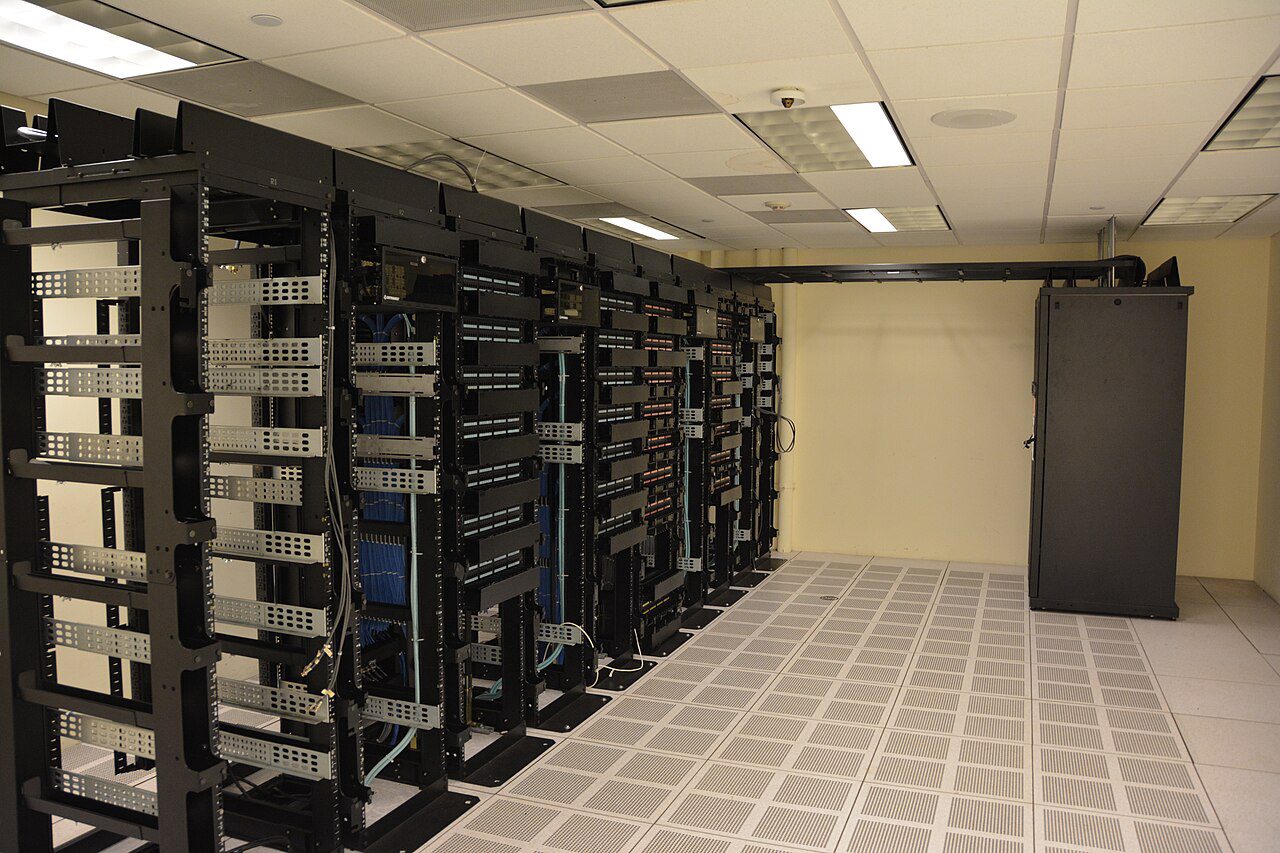
Individual queries, and even individual training runs, aren’t what’s straining power grids — the sheer number of them is. According to the International Energy Agency, the world’s data centers consumed about 415 terawatt-hours of electricity in 2024, roughly 1.5% of global electricity use, and that figure is on track to more than double to around 945 TWh by 2030 — close to 3% of the world’s electricity. The agency attributes most of that growth to AI: electricity use by AI-optimized “accelerated servers” is projected to grow about 30% a year, versus roughly 9% for conventional servers, with the US and China accounting for nearly 80% of the added demand. More advanced chips let more AI compute be packed into the same data center footprint, but that doesn’t reduce the total electricity those chips draw once they’re running around the clock.
The Water Side
Water enters the picture mainly through cooling. Data centers generate enormous heat from densely packed hardware, and many still rely on evaporative cooling systems that consume fresh water in the process. Per-query estimates like Google’s 0.26 milliliters or OpenAI’s 0.32 milliliters are individually negligible, but scaled to billions of daily queries — plus the water used to cool the servers running everything else those companies do — total site-level water use can run into the hundreds of millions of gallons a year for a single large facility. That’s why water, not just electricity, has become part of the debate over where new data centers get built.
Why It’s Becoming a Local Fight
As AI-driven data center construction has accelerated, so has local pushback — not over the energy of a single chatbot reply, but over rising electricity bills, strained water supplies, and grid capacity in the towns where these facilities are actually built. That tension is why a growing number of US states and cities have imposed data center moratoriums — temporary freezes on new permits — while utilities figure out how to add enough generating capacity to keep up.
So, Is It a Problem?
The honest answer is: it depends on what’s being measured. On a per-query basis, using an AI chatbot is a small fraction of the energy of, say, driving a car or running a dishwasher. But AI’s aggregate footprint is growing far faster than most other sources of electricity demand, concentrated in a small number of regions, and — because companies rarely disclose training costs or full-facility water use — harder for outsiders to verify than the tidy per-query numbers suggest. The trend to watch isn’t the wattage of one reply; it’s how fast the world is building the data centers that answer billions of them.
In the News
That growth is exactly why chipmakers keep expanding capacity: TSMC recently pledged an extra $100 billion for its Arizona fabs, pushing its total US investment to $265 billion. More advanced chips built at that scale are what let AI companies keep packing more compute — and more electricity demand — into the same data center footprint.